Advanced LTPBR Courses Return This Fall

Published on August 11, 2026

Advance Your Riverscape Restoration Skills This Fall

Live online courses in LTPBR planning, design, monitoring, and prioritization

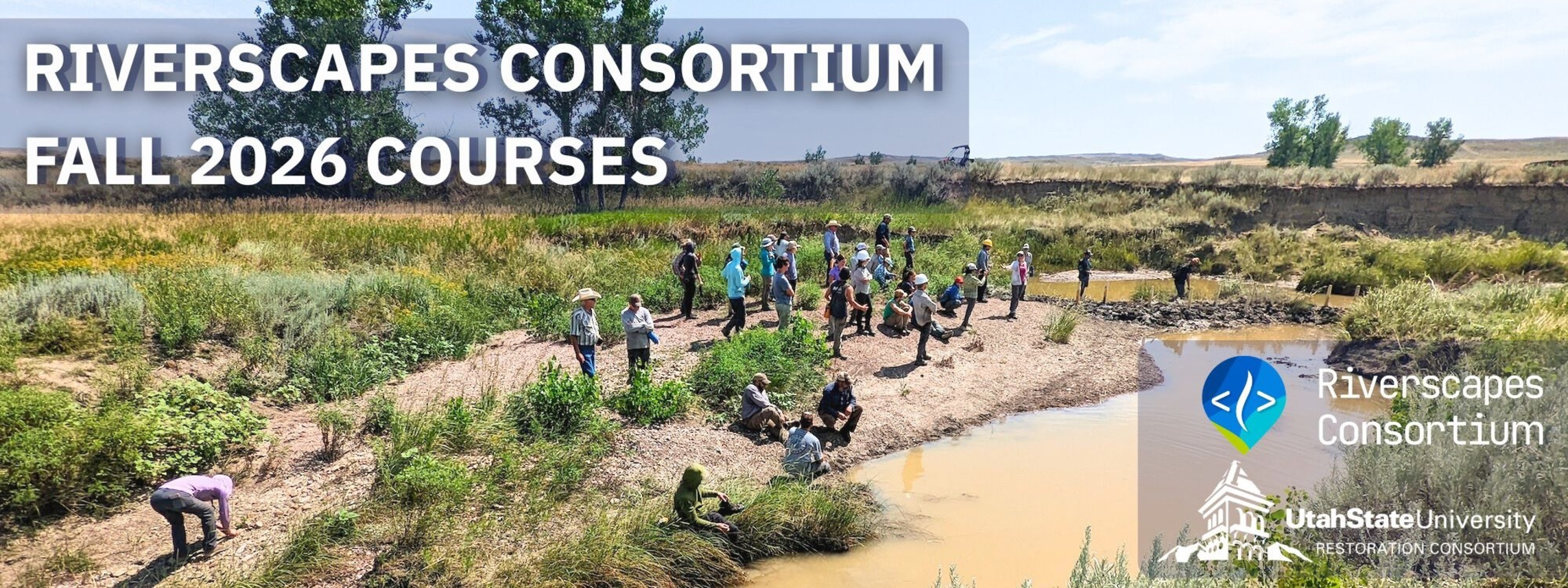
Our popular lineup of advanced riverscapes courses is back this fall. Designed for professionals, practitioners, and students — anyone working to understand, manage, and restore healthy riverscapes.

View Courses and Register


Low-Tech Process-Based Restoration (LTPBR) of Riverscapes - Advanced Short Courses

Fall 2026 | Online

Each course: 1 Graduate Credit or 1.5 CEUs

Take your LTPBR work to the next level with Utah State University’s Advanced LTPBR short-course series this fall.

Four live online courses dive deep into both the practical and the technical aspects of project planning, design, riverscape monitoring, and screening and prioritization. This series features updated content, guest lecturers, practical Riverscapes Studio (QRiS) instruction, and the flexibility to take one class or all four.

This advanced series is recognized as Level III federal training in the Federal AgLearn and DOI Talent professional development courses.

Course Schedule and Registration


Advanced LTPBR Planning: September 28-October 1

Turn your understanding of a riverscape into a clear, defensible restoration plan. Learn to use Riverscapes Studio (QRiS) for advanced site-scale planning of LTPBR projects. Students will assess current, historic, and potential future conditions of riverscape health to prepare for LTPBR design.


Advanced LTPBR Design: October 13-16

Move from planning to a practical, site-specific LTPBR design. Learn to use Riverscapes Studio (QRiS) to complete advanced site-scale designs of LTPBR projects. Students will conduct desktop designs, discuss field designs, prepare a design report, and learn how to account for risks and constraints. 


Riverscape Monitoring: October 26-29

Determine whether restoration actions are working. Learn to use Riverscapes Studio (QRiS) to measure and track riverscape health. Students will collect, analyze, and report data using a variety of monitoring methods. 


Screening & Prioritization: November 9-12

Make better decisions about where restoration can have the greatest impact. Learn to use Riverscapes Studio (QRiS) and Riverscape Network Models to identify, compare, and prioritize opportunities for conservation and restoration. Students will gain practical tools for deciding where to focus their work. 
 

View Courses and Register
 

If you or your colleagues are looking to expand your practical and technical LTPBR skill set, we hope you’ll join us this fall.

Please feel free to share these opportunities widely with your networks.

For any questions, email our support team

Thank you,

The Riverscapes Team