
LTPBR Protocol Version 2 Just Released
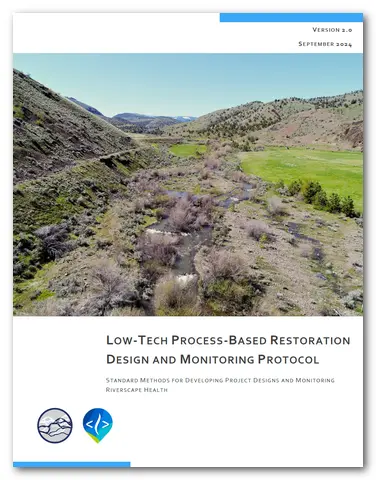
New Protocol Released Today!
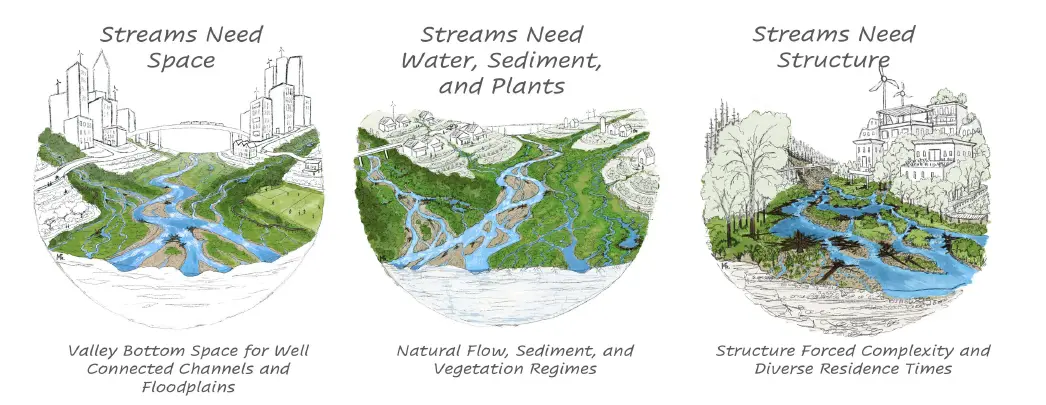
Today, the Low-Tech Process-Based Restoration Design and Monitoring Protocol - version 2.0, was published. This a project-based, flexible and extendible protocol for action-effectiveness monitoring of LTPBR projects. The protocol lays out the basics for how to do document, quantify, record and analyze the planning, design, as-builts and evaluation steps of LTPBR projects. The protocol aligns specifically with the principles of riverscape health, and is set up to provide flexiliblity in the mapping, assessment and quantification of measures of riverscape health though time in data capture events.
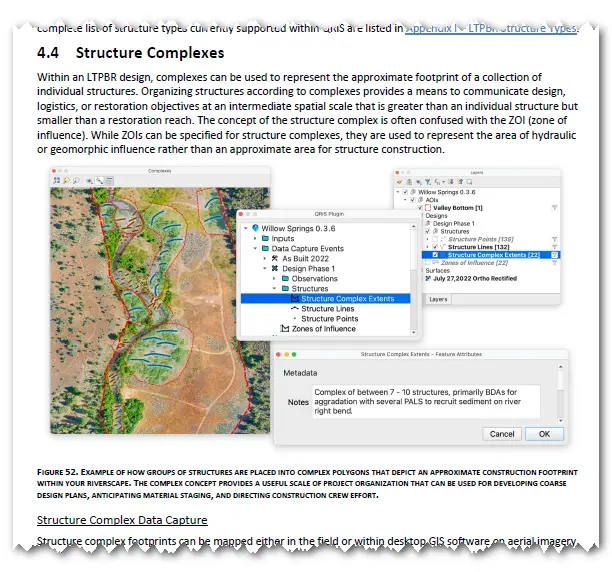
The protocol is aligned to be implemented within Riverscapes Studio QGIS Plugin (QRiS). Download the PDF here.
Weber N., Wheaton J.M., Shalcross A., Al-Chokhachy R, Bailey P., Bartelt K., Bennett S., Bouwes B., Bouwes N., Gilbert J., Dickard M., Heitke J., Jordan C., Glassic H., MacFarlane W.W., Miller S., Saunders C., Whitehead K. 2024. Low-Tech Process-Based Restoration Design and Monitoring Protocol: Standard Methods for Developing Project Designs and Assessing Riverscape Health. Version 2.0. Prepared by Anabranch Solutions and Utah State University Riverscapes Assessment and Monitoring Lab. Prepared for the Bureau of Land Management. Logan, UT. 81 pp. DOI: 10.5281/zenodo.13769899
This effort was supported by a vareity of agencies including the BLM, USFS, NOAA, USFWS and NRCS. However, the protocol update was really made possible because of leadership and investment from the BLM.
We anticipate regular updates to this protocol as it continues to be implemented, refined and improvements to QRiS and integration with various field aquistion platforms (e.g. in Survey123, Field Mapper and QField) trickle at. Once QRiS 1.0 is released, the Riverscapes Consortium will begin hosting a series of training webinars demonstrating application of specific aspects of the protocol. Stay tuned for updates, and feel free to take it for a test-drive in QRiS. We have been designing, building and monitoring a ton of projects ourselves with the protocol. As we get more repetition of its application in different settings and by different groups, we will release upates and improvements. We welcome your input on QRiS here, or on the protocol and monitoring of riverscape health here.